
Stay Wild Travels contains affiliate links. If you make a purchase using one of these links then we may receive compensation at no extra cost to you. Ads and affiliate links are how we keep this content free. A huge thanks if you use these as it helps us a lot! See our Full Policy for more information.
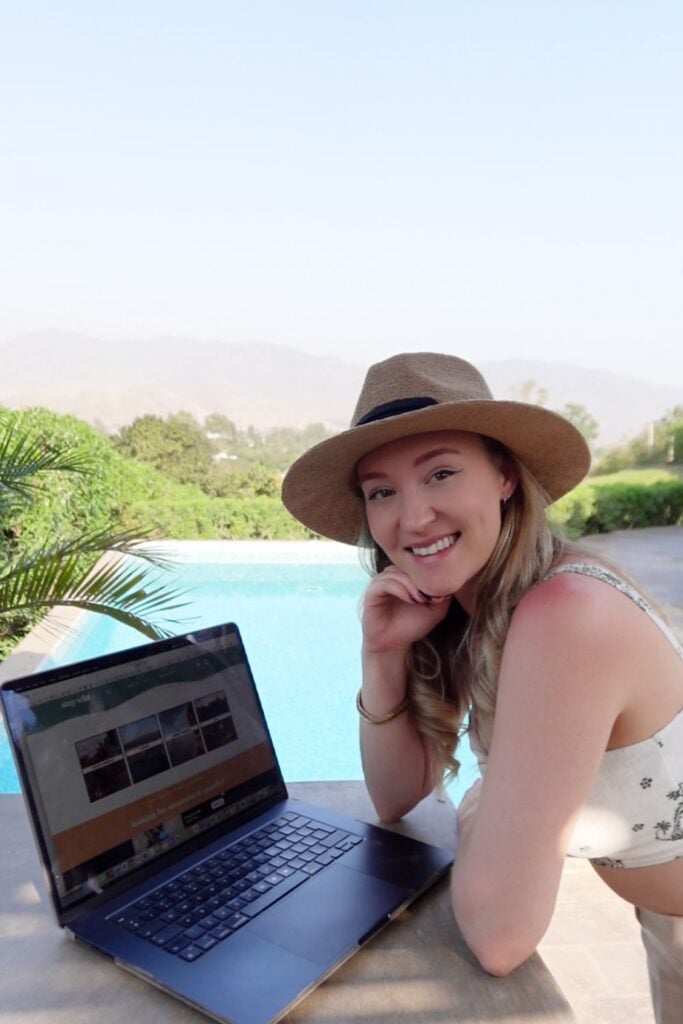

As a digital nomad living in Peru since 2023, I’m going to share absolutely everything you need to know about remote working here – from visas, real cost-of-living numbers, best cities, coworking, safety, medical insurance & so much more.
This Peru digital nomad guide is going to be comprehensive, so buckle up.
Why Choose Peru as a Digital Nomad?
Peru is one of the most diverse countries in Latin America. You have the big bustling city of Lima, with both modern and bohemian neighbourhoods, and incredible mountains all over the country, but especially surrounding Huaraz and Cusco. You have the desert, coastal surf towns and even a spot that’s a bucket list trip for many – the Amazon rainforest.
So, whilst some may overlook Peru for places like Mexico, Colombia or Argentina, in my opinion, Peru actually has a lot more if you’re a digital nomad that’s looking for some big adventures along the way.
And – perhaps the best part – is that it’s for a fraction of the cost (more on that later).
A couple of other big ticks for Peru are that it also runs on GMT-5, which lines up well with most U.S. working hours, and the food is incredible – especially compared to Colombia and Mexico (sorry, Colombia and Mexico – I love your countries, but Peru wins on food).
Oh, and I personally feel much safer here than I do in some of the other countries I mentioned.
P.s, if you’re tight on time, here’s a quick guide:
📍 Best locations: Lima, Cusco, Arequipa or Pisac
🩺 Best digital nomad Insurance: SafetyWing Nomad Insurance
🏨 Best place to find accommodation: Airbnb or Urbania
✈️ Digital nomad visa: pending, but there are easy work arounds – see relevant sections
Quick Facts About Living in Peru


Currency
The currency here in Peru is the Peruvian Soles. However, US dollars are also floating about. You can’t yet pay for things in supermarkets and restaurants etc in dollars, but you can get a bank account with dollars, and there are plenty of people on the street (atleast, in the major cities) who will exchange soles to dollars for you.
Language
In Peru they speak Spanish. I find the Spanish in Peru a lot easier to understand than in places like Chile, the north of Colombia or even Mexico.
That being said, I would say that fewer people speak English here. It’s rarely a problem if you understand basic Spanish, though, so I wouldn’t let that be a factor that stops you from moving to Peru to be a digital nomad.
Time Zone
As I already mentioned Peru is on GMT -5 0 – which is the same as EST without daylight savings.
Peru Digital Nomad Visa: What You Need to Know
Peru has recently announced that a digital nomad visa designed for remote workers who earn income outside the country is coming imminently.
If you’re thinking, ‘well, if there isn’t one yet, then that’s my plan out the window’, hold fire because I have some options for you. But first, let’s cover what the Peru digital nomad visa is predicted to look like.
Eligibility and Requirements
What you’ll likely need is:
- Company: you must be generating 100% of your income from outside of Peru
- Passport: a usual, a valid passport for the duration of your stay – and a TBC on how many months you need to have left
- Income: it’s suspected that it will be around $1000 a month – but again, nothing confirmed as of yet
- Health Insurance: you’ll almost certainly be expected to have some proof – I personally use SafetyWing’s Nomad Essential Plan and have done ever since I’ve been travelling and being a nomad – you can read my full guide on them here: SafetyWing Review
- Documents: you’ll likely ned to have proof of things like contracts, income, accommodation and even a criminal record check – all the pretty standard stuff
How to Apply for the Visa
Applications for any kind of visa here in Peru are processed through the Consulado, so I suspect that the Peru Digital Nomad visa will be the same.
Length of Stay and Extensions
This visa generally is expected to allow you to stay in Peru for up to a year, but it’s also likely that it will be renewable for a second year.
Non-Digital Nomad Visa Options
As I said, this digital nomad visa is pending. But that doesn’t mean that you can’t come and work remotely in Peru – so let’s cover your best options.
Option 1: Tourist Visa
If you’re from the UK, the US and many other countries, then you can come to Peru for 3 months at a time – 3 months in, 3 months out – on a tourist visa. It’s really simple.
If you do overstay your tourist visa, you can usually pay a cheap fee at the airport (something like $1 a day), but there is no guarantee that they’ll be nice about letting you back into the country the next time you visit.
Option 2: Student Visa
Option 2 is to get a student visa. For example, you could join an accredited university and start taking Spanish classes. Or, if you already know Spanish, then another language like Portuguese is an option. I had a friend who did this. But just bear in mind that this is a full-on course – I think she was doing an hour class online every weekday.
Note: as of December 2025, I’m hearing from my Lima community this might no longer be an option – I’ll update this as soon as I have solid info on that, but just wanted to give you the heads up!
Option 3: Set Up A Business
If you come here and absolutely love it – or, like me, love a Peruvian – then you can set up a business for a reasonable cost. Myself and most of my friends here have done this, so if you need a contact to help you get set up, feel free to drop me an email, or better, a direct message on Instagram, because sometimes my emails get lost in a bunch of spam.
Best Cities in Peru for Digital Nomads And Costs
The cost of living in Peru is the biggest bonus for me – and if you’re from most places in Europe or the US, or generating income from a salary there, it will likely be great for you too.
I’m going to break down my personal cost of living as a digital nomad living in Lima, and then share some estimated costs for a few other places that I have personally travelled to myself during my solo trip to Peru, plus during the time I’ve lived here.
Lima


Before we jump in, the three most popular areas that tourists and digital nomads to base themselves in Lima are:
- Miraflores: the most popular tourist district
- Barranco: the bohemian district that’s still pretty popular with tourists and usually preferred for digital nomads. It’s also where I live and love it.
- San Isidro: the business district and more upscale, with fancy restaurants and bars
You can find decently priced places to stay in all of these areas, but Barranco is the cheapest and has the most to offer for digital nomads in my opinion.
What I pay:
- Rent: for me, this is $650 a month for an unfurnished, small 3-bed apartment equipped with a co-working area, rooftop pool, laundry, games room, BBQ areas and a small gym. However, I do think we have a pretty good deal as a lot of my friends here are paying between $750-$1000 (albeit, for a furnished apartment).
- Bills: between building maintenance, gas, wifi and all the rest of it, it works out to be $100 a month.
- Food: this is a weird one, because honestly, prices for food in the supermarket are pretty similar to the UK and US. But, you can eat out for crazy cheap. We have something called ‘menu del dia’ which translates to ‘menu of the day’ and you can pick this up in a lot of restaurants for 15-20 soles, which is less than $5, and you get a starter, main and drink. If you’re going out for a regular meal in a decent restaurant, you’ll rarely pay more than $15. Basically, most of the time it’s cheaper to eat out than it is to cook at home – yeah, I know…make it make sense. Between store-bought food and restaurants, I spend about $400 a month.
- Co-working areas: honestly, I don’t go to coworking areas because I have a free one in my building (and most of them do), and there’s plenty of cafes around to work from. However, if you are the type of person who prefers this working environment, then there’s everything from small independent co-working spaces to big, well-known spots like WeWork – although, of course, these do come at a more premium price. You’re looking at anywhere from $100-$200 a month.
Cusco/Pisac

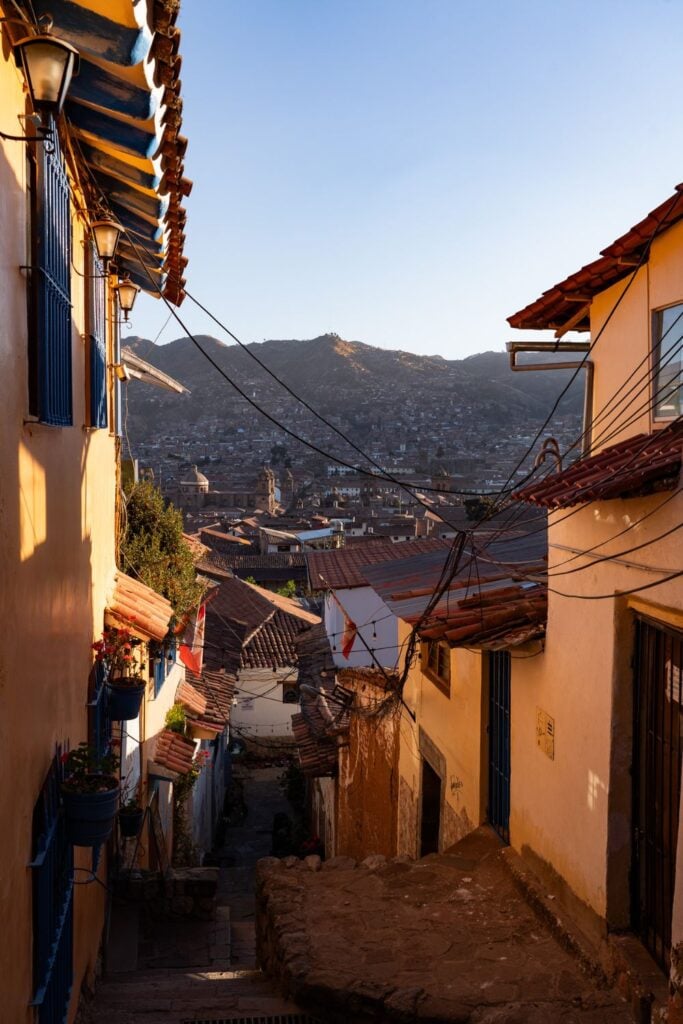
Cusco is, of course, where most tourists head before Machu Picchu, and if I were ever going to be a digital nomad in Cusco for a while, I’d choose the neighbourhood of San Blas because it’s so cute. However, whilst it’s an incredible place, my understanding is that most digital nomads prefer Pisac, which is about 1 hour from Cusco and far less touristy.
Let’s break down the rough costs:
- Rent: $500–$800 a month
- Bills: $120-$200 a month (because it’s higher altitude and super cold at night, so you’d need heating)
- Food: $250-$350 a month
- Coworking: $70–$120 a month
Arequipa
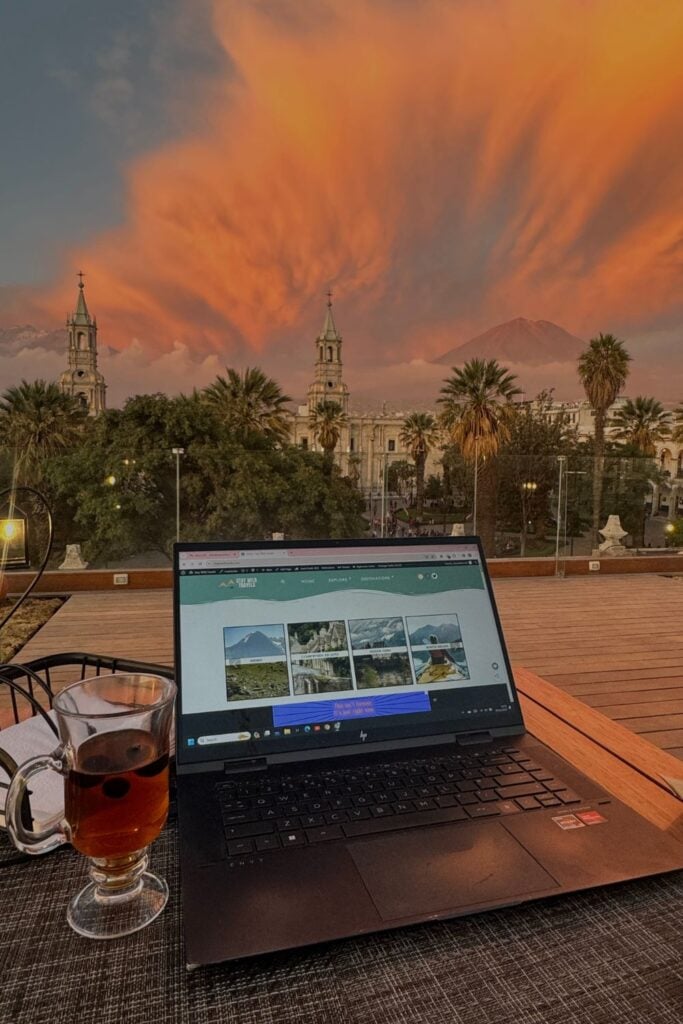

Next up we have Arequipa, and urgh, honestly, I love this city. It’s so beautiful and feels almost European at times. And, to make it even better, you have a volcano in the background and stunning sunsets nearly all the time. The cherry on top is that it’s even more affordable than Cusco and Lima – so let’s break down the costs:
- Rent: $400–$700 a month
- Bills: $120-$200 a month (again, because it’s higher altitude and super cold at night, so you’d need heating)
- Food: $200-$300 a month
- Coworking: $70–$120 a month
Ofcourse, there are more than just 3 places that you be a digital nomad in Peru, but these are the most popular.
Other places to check out are Mancora (if you’re into beach towns), Huaraz (for insane mountains and lakes) and Iquitos (for access to the jungle).
Lima is by far the most well-connected and has the most to offer in my opinion – but if you’re not into big bustling cities and prefer being able to escape to nature, then I’d recommend choosing another location.
Day-to-Day Life in Peru as a Digital Nomad


Finding Accommodation
If you’re unsure how long you’re going to stay in Peru, then realistically, Airbnb is going to be your best option. There are plenty of monthly stays available, and it’s easy enough to negotiate the prices with the hosts to something that will match your budget (within reason, of course).
Beyond that, Urbania or Adondevivir are great platforms, as well as Facebook marketplace. The latter is where I found my current apartment and we have a really good deal for the location, size and facilities. Peru is also pretty old school when it comes to marketing, so a lot of the time you’ll see adverts stuck to lamp posts and that kind of thing too.
Food and Grocery Shopping
Markets are usually pretty cheap, but I personally always go to the supermarket to avoid any risk of food poisoning. There are plenty of options, but Metro, Tottus, Vivanda, and Wong are the ones I flit between.
When it comes to restaurants, Peru has many of the top-rated ones in the world. You’ve got Central and Maido in Lima, but be warned, they aren’t cheap!
Transport and Getting Around
Uber operates in Lima, Cusco and Arequipa but not Pisac. It’s super cheap to get around I usually only spend a few dollars every time I take one – granted, I’m only ever travelling for 20 minutes tops.
If you’re on an even tighter budget, then you’ve also got the metropolitano in Lima and buses everywhere else. I personally don’t take these because I usually walk or take an Uber, but I know they’re less than a dollar.
Learning Spanish
I do recommend that you learn a little bit of Spanish before you arrive, if you can – just basic phrases. It will help make things a bit easier for you, even if it’s just things like ‘where is the bathroom’ or ‘can I order a cheeseburger please’.
If you want to learn Spanish properly in Lima, then I can personally recommend Peruwayna in Miraflores. They do group and private classes for an affordable price, and they’re super friendly.
Integration Into The Digital Nomad Community
Integrating into the culture in Peru can be easy if you put in a bit of effort. There are Facebook and Whatsapp groups that organise events, and I’ve made some great friends through these. There are literally about 100 different WhatsApp groups for digital nomads living in Lima – everything from Pickle Ball, Foodies and Coworking groups – so it’s impossible not to make friends if you’re planning to work remotely from Peru and you’re willing to put yourself out there.
I can’t share the WhatsApp groups, but if you join the Facebook group: Expats Who Love Lima you’ll be able to ask someone to add your number.
Note: that’s a Lima Facebook group, but someone will be able to link you to one in Arequipa or Cusco too.
Healthcare, Insurance, and Safety Tips
Healthcare
The healthcare in Peru is pretty good. In Lima, there are plenty of modern clinics – although sometimes it is hard to find someone who speaks English. That being said, they’re all very accommodating and more than happy to help you through Google Translate.
I haven’t had experience of going to a clinic in any other city besides Lima, however, my Peruvian boyfriend tells me that in major cities like Cusco and Arequipa, they are the same.
When it comes to things like the dentist, there are plenty around for a good price. You’ll pay a significant amount less than you do in the UK and US. I paid something like £18 for a white filling recently which is wild.
Digital Nomad Medical Insurance
When it comes to insurance, I’m a long-time user of SafetyWing because they’re one of the most affordable I’ve found on the market, whilst also being pretty comprehensive. They were something like 80% cheaper than what I was previously paying, which is crazy.
I’ve claimed twice since I’ve used them without any issues, so I always recommend them to my friends and family – and of course, you guys too. As I said before, I wrote an in-depth blog post review about which I’ll link again below. However, if you want a quick overview, then here’s what you need to know about their two policies and the cost difference.
Read more: I have a guide if stuck between SafetyWing and World Nomads for digital nomads
Policies
Disclaimer: I am not a licensed insurance broker, nor am I giving insurance advice. Anything stated below is not a promise of coverage and you must read the policy and do your own research prior to making a purchase.
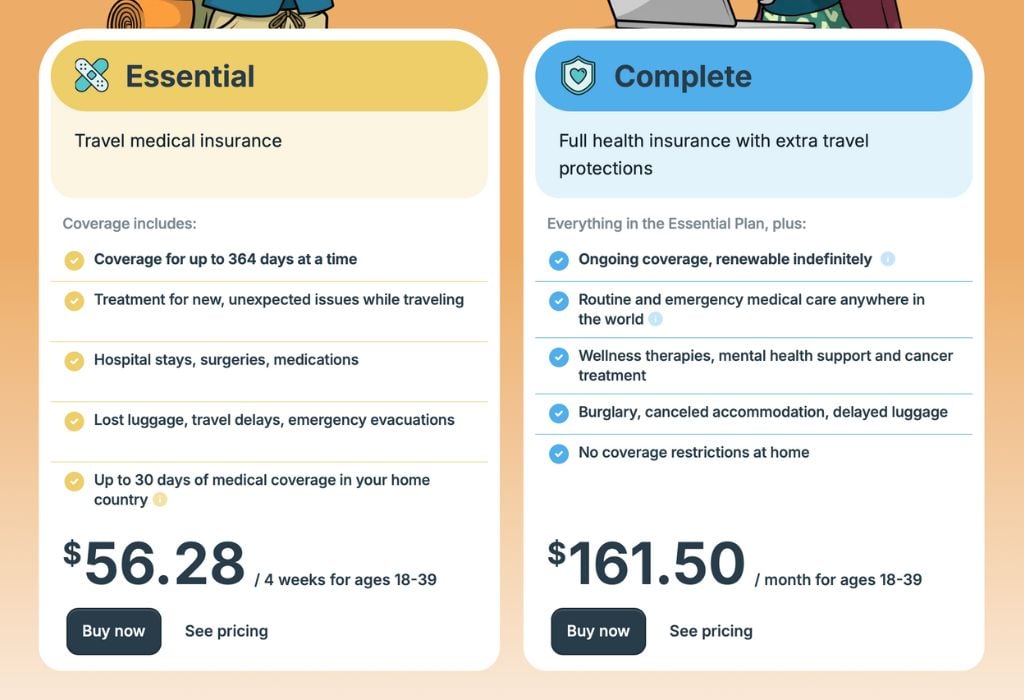
They offer two policies: Essential and Complete.
The Essential Plan covers you for the below:
- Coverage for up to 364 days at a time
- Treatment for new, unexpected issues while traveling
- Hospital stays, surgeries, medications
- Lost luggage, travel delays, emergency evacuations
- Up to 30 days of medical coverage in your homecountry
Whereas the Complete Plan covers you for everything the Essential plan offers, plus the below:
- Ongoing coverage, renewable indefinitely
- Routine and emergency medical care anywhere in the world
- Wellness therapies, mental health support and cancer treatment
- Burglary, canceled accommodation, delayed luggage
- At home coverage
The Essential Plan is $56.28 for 4 weeks, whereas the Complete plan is $161.50.
Check out the full blog post: SafetyWing Review: Honest Opinion From A Digital Nomad
Use the calculator below to check:
Safety In Peru
Safety in Peru really depends on the area where you’re going, which is like anywhere, to be honest.
For example, Lima has extremely dangerous zones, but the bubble of Barranco, Miraflores and San Isidro is mostly safe except for theft, which again, can happen in any major city.
What I will say is that whilst I have had my phone stolen here (which, luckily, I recovered the cost for through a claim with SafetyWing), I feel 10 times safer than I do when I go to London. I constantly take Ubers or walk around late at night alone, and not once have I felt scared (and I’m someone who is slightly anxious about safety).
The same goes for Cusco and Arequipa. Just be street smart, use Uber and not taxis where you can, and you’ll be fine.
SIM Cards And Banking for Digital Nomads in Peru
Best SIM Card Providers
If you’re going to be jumping in and out of the country a lot, then an eSim from Airalo is my go-to.
If you’re planning to work remotely from Peru for a while, then ditch the eSim and pick up a cheap pay-as-you-go plan from Claro, Movistar or Bitel. I use Bitel and pay less than $10 a month for unlimited data.
I believe you can get these from the airport on arrival in Lima, but if not, then every city I mentioned has plenty of stores – you’ll just need to take your passport with you when you go to get a SIM, which is standard procedure if you’ve been a digital nomad in Latin America for a while.
Banking
To open a bank account in Peru, you’ll need a work visa or legal residency card, so it really depends on which route you’re going to go down in order to become a digital nomad here.
The best banks are:
- BCP (the one I bank with)
- Interbank
- BBVA
If you manage to get set up with BCP or Interbank, then you’ll also be able to use Yape or Plin, which is a bit like Venmo in the US, and you can pay in stores, restaurants, etc.
Besides that, of course, you can also use international cards like American Express, Revolut or Monzo.
If you need to change money from another currency, then I usually use Western Union.
Destinations To Visit As A Digital Nomad in Peru
Around Lima


Lima is a great base because it’s so well connected with cheap flights and buses to many other parts of Peru, so for that reason, most of my recommendations will come under Lima, but you can always take flights from the other locations too.
If you’re planning to do a bit of travelling around the country in one go, then I actually wrote a 10 day itinerary for Peru, as well as an itinerary for a 21 day trip.
- Paracas: beach town that’s great for visiting Paracas National Park and doing kitesurfing
- Huacachina: a desert oasis that’s popular for sand boarding and dune buggys
- Tarapoto: a gateway to the Amazon thats best for nature and waterfalls – more Peruvians than tourists
- Huaraz: incredible hikes and lakes like Laguna 69 and Laguna Paron
- Mancora: surf town in the north
- Iquitos: gateway city to the Amazon rainforest in the north
Around Cusco And Pisac


- Aguas Calientes: hot spring town below Machu Picchu
- The Sacred Valley: all around Cusco with many points of interest to visit
- Madre de Dios: Amazon rainforest in the south
Around Arequipa
- The Colca Canyon: a popular canyon hike close to Arequipa
Frequently Asked Questions About Being a Digital Nomad in Peru

Does Peru have a digital nomad visa?
Yes and no, Peru has introduced one, but it’s not yet available, but that doesn’t mean you can’t live in Peru as a digital nomad. In fact, this is already covered in this Peru digital guide under ‘Non-Digital Nomad Visa Options’.
Where do expats live in Peru?
Literally all the places I mentioned in this blog post: Lima, Arequipa, Cusco and Pisac. You will find expats in other locations, but these are the most popular and where you’ll be able to integrate into an expat community better.
Is Lima a good place to live?
In my opinion yes. People who don’t live here complain about the weather, but it’s only bad between June and August in my experience. Plus, on the flip side, you’re basically guaranteed perfect weather from December to April. Any time outside of that, it’s usually cloudy in the morning and sunny in the afternoon. If you’re from the UK like me, it’s an improvement.
How much does it cost to live in Lima?
Around $900–$2000 per month, depending on lifestyle.
Is the internet reliable in Peru?
Yes, in cafes, Airbnbs and apartments, it’s just as good as London, Paris, New York etc. Even when I went to the Amazon rainforest, the lodge I was staying at had great wi-fi.
Is Peru good for solo digital nomads?
Yes – especially Lima, Cusco and Pisac. You can make friends anywhere if you put yourself out there, but those places have groups and events in place to speed up the process.
Final Thoughts
Well, that’s a wrap! I hope you enjoyed this Peru digital nomad guide!
Living in Peru as a digital nomad has been one of the best decisions I’ve ever made. I get a great salary but have a low cost of living, meaning I can afford things I wouldn’t be able to in other parts of the world and travel without even thinking about the cost.
If you’re considering the move, I highly recommend it, and I’m more than happy to help with any of the process along the way – whether thats the visa or helping you to find friends, so feel free to get in touch via email or Instagram direct message!
Millie / Stay Wild Travels