
Stay Wild Travels contains affiliate links. If you make a purchase using one of these links then we may receive compensation at no extra cost to you. Ads and affiliate links are how we keep this content free. A huge thanks if you use these as it helps us a lot! See our Full Policy for more information.


Solo travel in Peru doesn’t need to feel daunting or overwhelming, but I totally get why you might feel like that. I definitely felt like that before my solo backpacking trip to Peru, but having been there and done it (and now living there), I’m going to give you the low down on what’s safe, what’s not, where’s great for solo travellers, best accommodation, and so much more.
Is Peru Safe for Solo Travellers?
There are many different sides of Peru, and it is both a dangerous and safe place, depending on where you go – much like alot of places in the world.
But, for most travellers, Peru is safe and what I will say is that out of Colombia, Ecuador and Peru, Peru is the place that feels the safest to me.
The district where the airport is in Lima is unsafe, but once you hop in an Uber or jump on the airport bus to Miraflores, Barranco or San Isidro (the three main tourist areas), you’ll be in a much safer part of the city – it’s really a bubble away from the reality of the crime going on.
The same goes for Cusco, Iquitos and smaller destinations like Paracas and Huacachina (more of these destinations in a second) – just stick to the tourist areas and you will more than likely be fine (besides the odd gringo scam of price inflation and at worst, some pretty theft).
Now living in Lima and consistently continuing to travel around Peru solo, I feel a lot safer here than I do living in London and travelling to some places in Europe. Just make sure you have travel medical insurance with someone like Safetywing (who I use and have claimed with multiple times without any issues). I wrote a whole review about Safetywing if you’re interested in checking that out!
🎟️ Must book: Paracas & Huacachina from Lima, 4-day Amazon tour, quad bikes through the Sacred Valley & Machu Pichhu
📱Data: install an eSim from Airalo rather than buying a local sim – it’s much less hassle! Get $3 off with code ‘AMELIA2423’
🩺 Best travel medical insurance: at 80% cheaper with just as much coverage as what I was previously paying, I’ll never stop sharing how great SafetyWing is as a full-time traveller!
Top Destinations for Solo Travel in Peru
Peru has some incredible destinations, it’s a bloomin’ epic country). But, if you’re nervous for your trip and want to stay ‘on the beaten path’ as it were, then here are some places that felt super safe and where I made some great friends along the way.
Lima


As I’ve already said, Barranco, Miraflores and San Isidro are the areas that are considered safe in Lima, and the reality is that besides potentially going to the centre and to and from the airport/bus station, you’re unlikely to want to or need to leave these areas.
That being said, crime does still happen in these areas too. I’ve had my phone stolen in Barranco whilst walking down the street with it in my hand (luckily covered by Safetywing), so you still need to be conscious. It is a city after all.
For solo travellers, there’s plenty of events going on at hostels like Periwana or Black Llama – which you can attend even if you’re not staying there and want to connect with during your trip.
In terms of things to do, I’d recommend walking along the Malecón, taking a surf lesson, visiting Kennedy Park (aka the cat park), visiting the neighbourhood of Barranco and taking a trip to the centre. I actually wrote a guide on how to spend 24 hours in Lima if that’s helpful.
Cusco

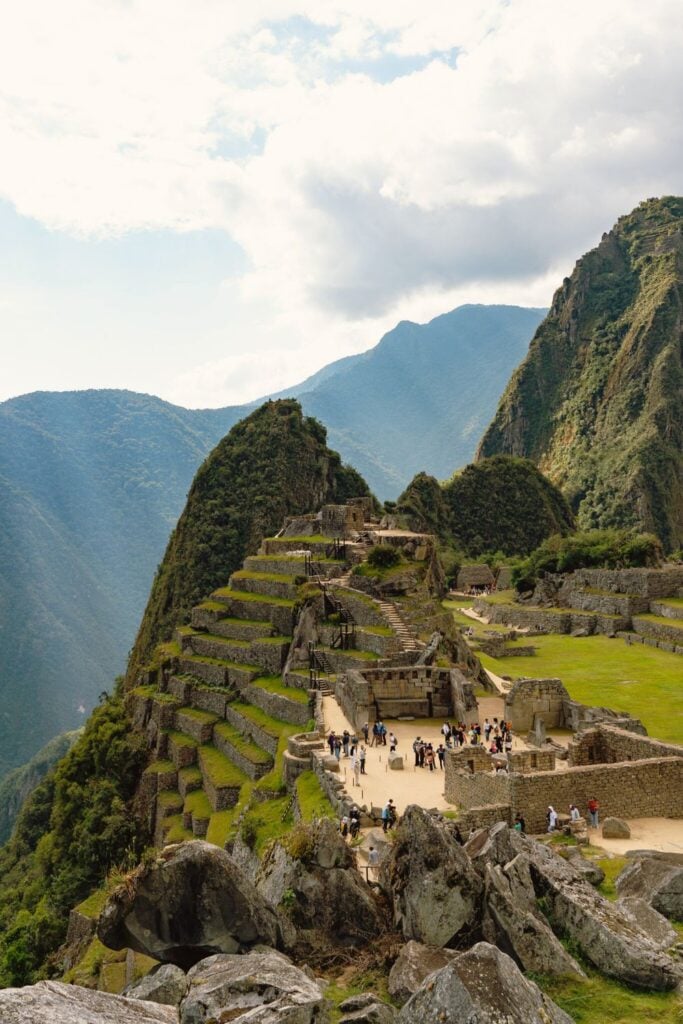
If you’re planning on visiting Machu Picchu on your solo trip, then you’ll be stopping in Cusco first – not only because that’s where you’ll either fly or bus into, but because you’ll need to acclimate to the altitude.
If you’re hanging around the Plaza de Armes, you’ll be fine (although, I did naively get kind of scammed by a lady with a llama there who tricked me into having a photo with it, only to then tell me I needed to pay – but hey, I guess I should have known better).
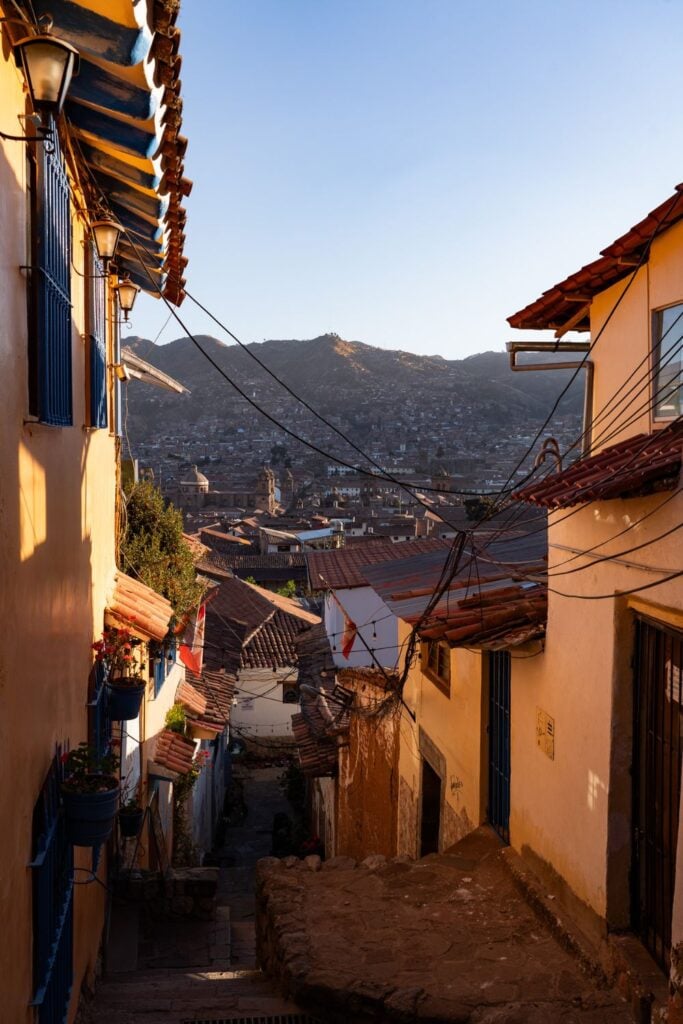
San Blas is also a safe area, although there are a lot of tiny alleyways which I would probably avoid wandering down alone at night, as it’s more of a quiet area.
There are a bunch of tours you can do in Cusco where you’ll be able to connect with other travellers – my personal favourite (besides Machu Picchu) was the quad bikes through the Sacred Valley. I feel like the pictures advertising this tour don’t do it justice, but you’ll see from the reviews just how incredible it is – it was 100% one of my favourite experiences from my trip.
Paracas


Paracas is a tiny little beach town with not much going on besides a bunch of resorts. But in my opinion, the best things to do in Paracas include renting a mini buggy and exploring Paracas National Park (or you can do it by ATV or a bus tour if you prefer), the boat trip around The Ballestas Islands (also known as poor man’s Galapagos) and the Golden Shadows trek which is easy and so good! It’s also a really popular location for kite surfing if you’re into that!
It’s super safe for solo travellers, and there’s nothing I need to warn you about here, but unless you’re staying in a hostel, it’s not the most sociable of places.
Huacachina


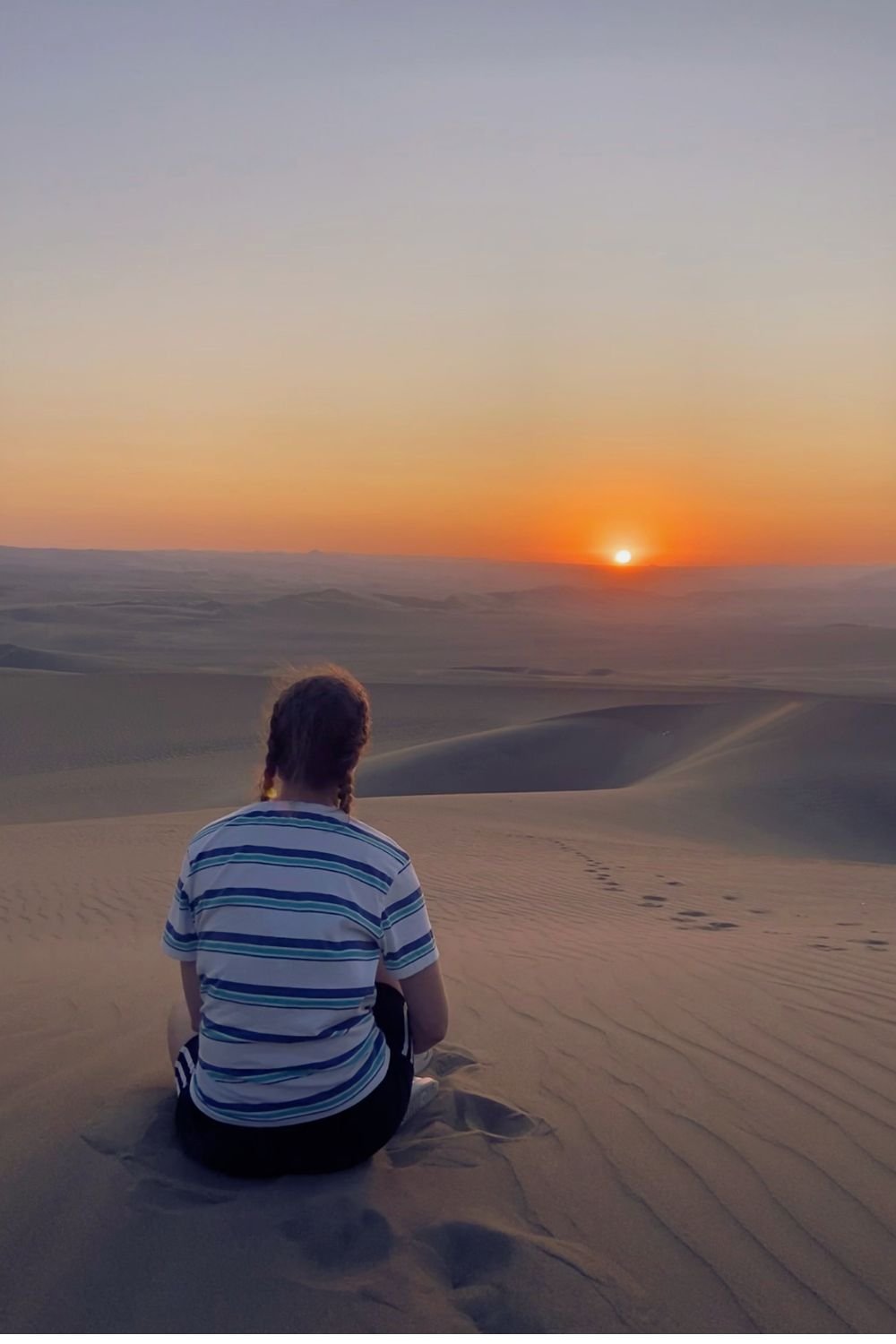
Huacachina is usually either a day trip from Lima (combined with Paracas) or a stop on the way to Cusco. It’s the spot where most solo travellers and backpackers will head to on their journey to Cusco for sandboarding and buggying across the desert.
Both of these things to do in Huacachina are two of my funnest memories from travelling around Peru solo, but it’s also definitely the place where I’m glad I had my SafetyWing insurance the most, because the sand buggies are quite the ride and I felt like I was clinging on for dear life for most of it!
Arequipa

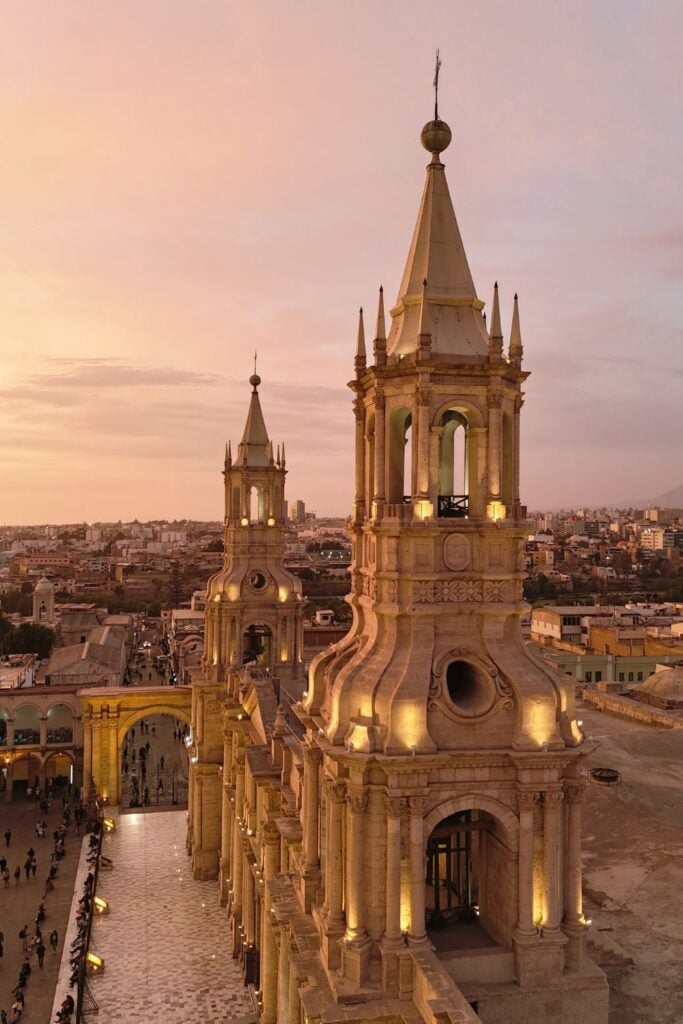
Arequipa is a surprisingly big city, but also one of the safest in Peru. I’ve never had any bad experiences there, so I would feel super confident saying that you’ve got nothing to worry about (besides petty theft and the typical tourist traps).
The Colca Canyon hike is one of the biggest attractions in this area, but when I visited, I was all hiked out, so I didn’t book a trip. I figured I’d probably head back here at some point so there was no rush.
Iquitos


Iquitos is one of the gateway cities to the Amazon, and it’s generally considered safe; however, there isn’t Uber here, so you’re left to either take a moto taxi or an official airport taxi. I have a weird thing about taking anything that isn’t Uber, where I can track where I’m going, so this always makes me feel a little uneasy, but in my experience as a solo female traveller, this was actually fine.
Just one thing to watch out for here is the tours to the Amazon. Ideally, you want to book a decent one because there is quite a lot of crime in the Amazon itself, so I personally wouldn’t risk a cheap tour where you might not be able to communicate or get help if you need it. My friend had a really bad experience with this that ruined her trip.
I personally booked a 4-day Amazon tour, but I would actually recommend the 3-day version as I felt like I’d seen enough by that point.
You’ll also want to make sure you’ve got your yellow fever vaccine before heading here (even though some tour companies say it’s not necessary, I would get it). If you didn’t get it before leaving your home country then you can get it in Lima for fairly cheap from Suiza Lab (and probably other clinics). Just bear in mind that it doesn’t take effect for 10 days after the vaccination.
Huaraz

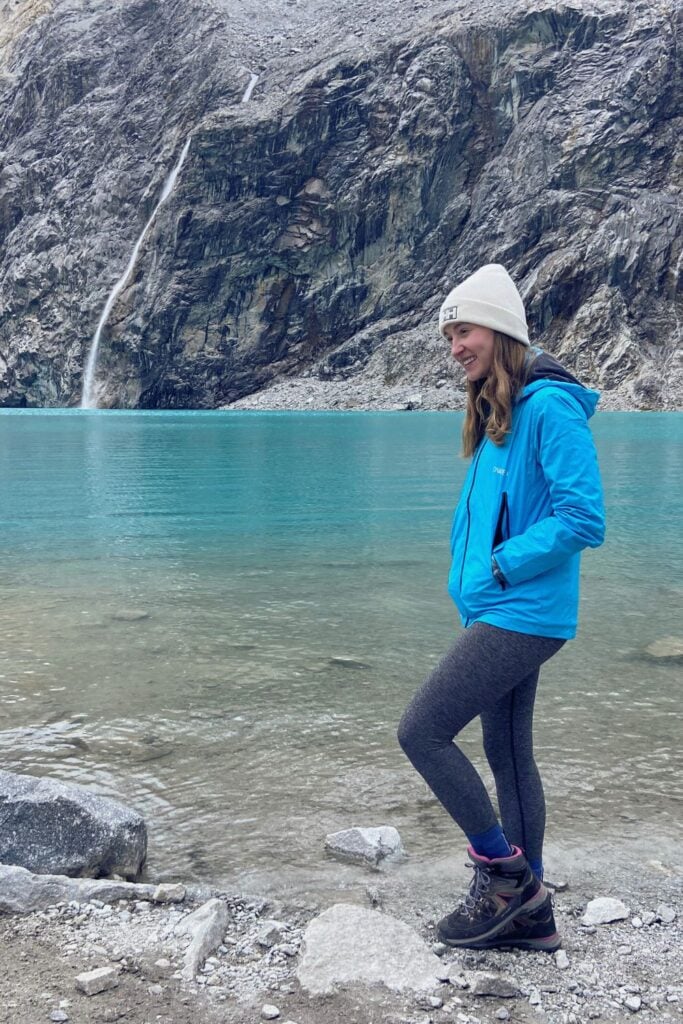
Huaraz is a mountain town in the North and acts as the gateway to some of Peru’s best lakes and hikes. It’s generally a safe city to be in; however, it comes with different types of risks. This is a really high altitude place to be – it’s slightly less than Cusco at 3050 meters above sea level, but a lot of the hikes around the area are much higher than those around Cusco. You’ll definitely need to be prepared and bear in mind that this is a remote part of Peru, so having a guide for your hikes is something I personally chose to do and recommend you do too.
Also, I got scammed by a taxi driver here who refused to give me any change for my 100 soles note, so always carry some smaller change!
The two most popular hikes in this area are the Laguna 69 hike and the easy Laguna Paron day trip, thats kind of a hike, but more of an acclimatisation walk with a pretty lake at the end.
Getting Around Peru Solo
Plane
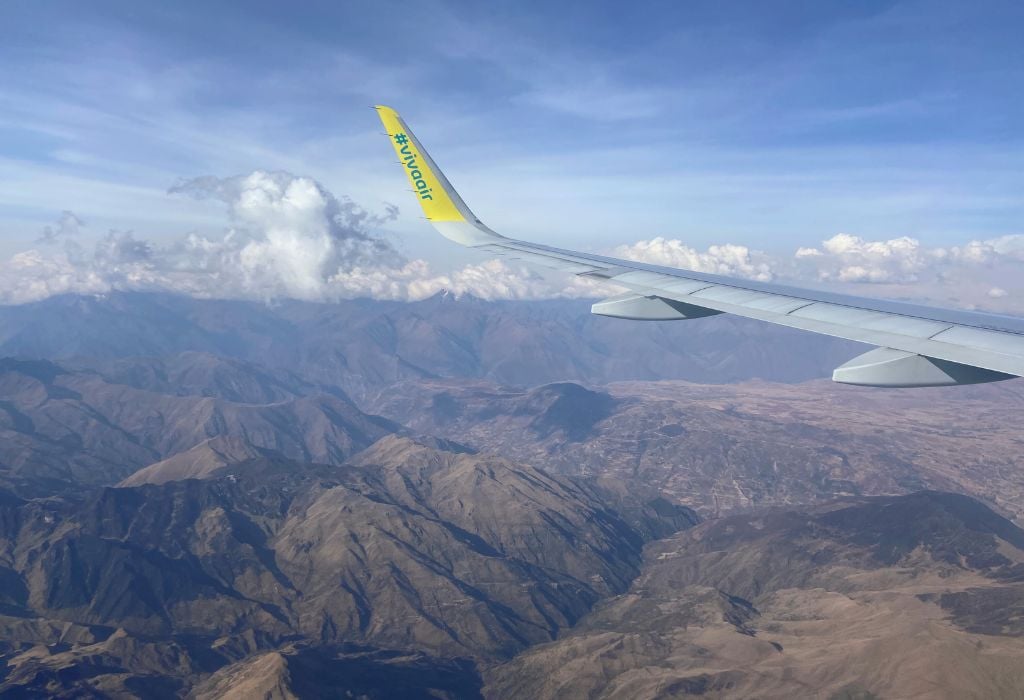
If you’re taking a plane between places in Peru, then I personally try to opt for a LATAM flight rather than Sky, Viva Air or something equally as budget (I’ve been there and done it, and it’s not enjoyable). I’m not saying they’re necessarily unsafe or anything like that, but LATAM Airlines has a better reputation.
Buses/coaches
When it comes to buses, I’d recommend Cruz Del Sur if you’re travelling independently across the country – they’re more comfortable and again, have a better reputation (albeit for a slightly higher cost). If you’re someone who wants to meet other travellers along the way, then I’d recommend booking a PeruHop bus route. I’ve done both of these things at different times and felt very safe as a solo female travelling in Peru alone.
What you’ll need to bear in mind is that Peru often has strikes and protests, and this can sometimes mean that there are roadblocks and buses are unable to pass. I don’t want to put you off, but I have had friends who have been stuck on a bus for a day or two because of this!
Local Buses and Taxis
When it comes to buses and taxis in the cities, honestly, I would just stick to Uber. It’s cheap and Peru has, in recent years, had some killings on local buses (usually the bus driver rather than passengers, which is still awful and terrifying).
If you do want to take a bus, you have a few different types. The first is a combi bus, which is a minivan that usually waits until it’s full to leave, a regular bus that routes around the city and the metropolitano, which operates in Lima and is more like an overground metro bus line.
Accommodation

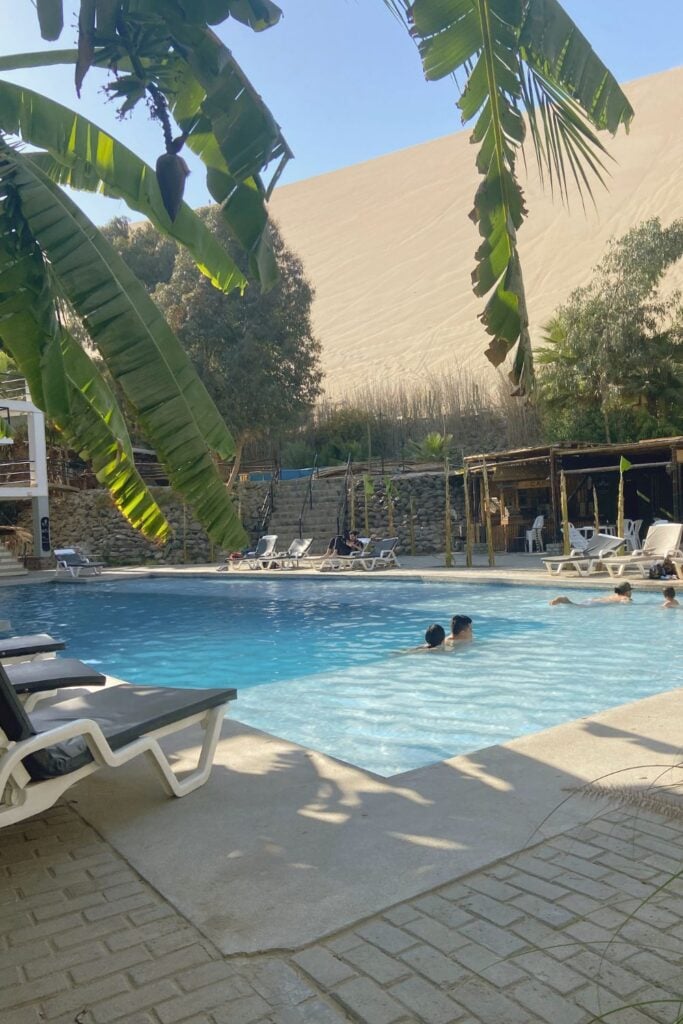
If you’re solo travelling across Peru, then lots of you are probably going to be solo backpacking, and when I did that myself, I stayed in hostels. If you’re feeling unsafe or lonely, then staying in a hostel means you’ll be surrounded by people, and that should – in theory – make you feel safer and give you the opportunity to connect with other travellers.
Since living here, I have also done more travelling – a lot of the time solo too, so I’ll list out some places I’ve personally stayed, but bear in mind that most places that have decent reviews are completely safe.
- Lima
Periwana
Naia
Black Llama
Viajero - Huacachina
Bananas Adventure - Paracas
Viajero - Cusco
SuperTramp Hostel - Arequipa
Viajero - Iquitos
Hotel de Turistas Iquitos
Flying Dog Hostel - Huaraz
Alps Huaraz
Health and Safety Tips
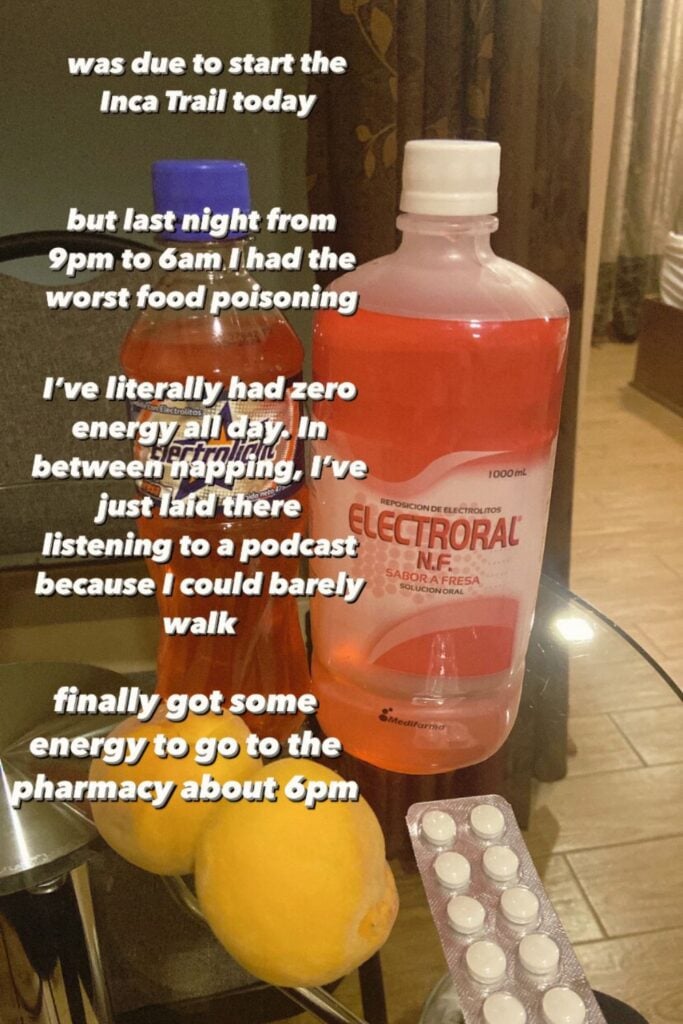
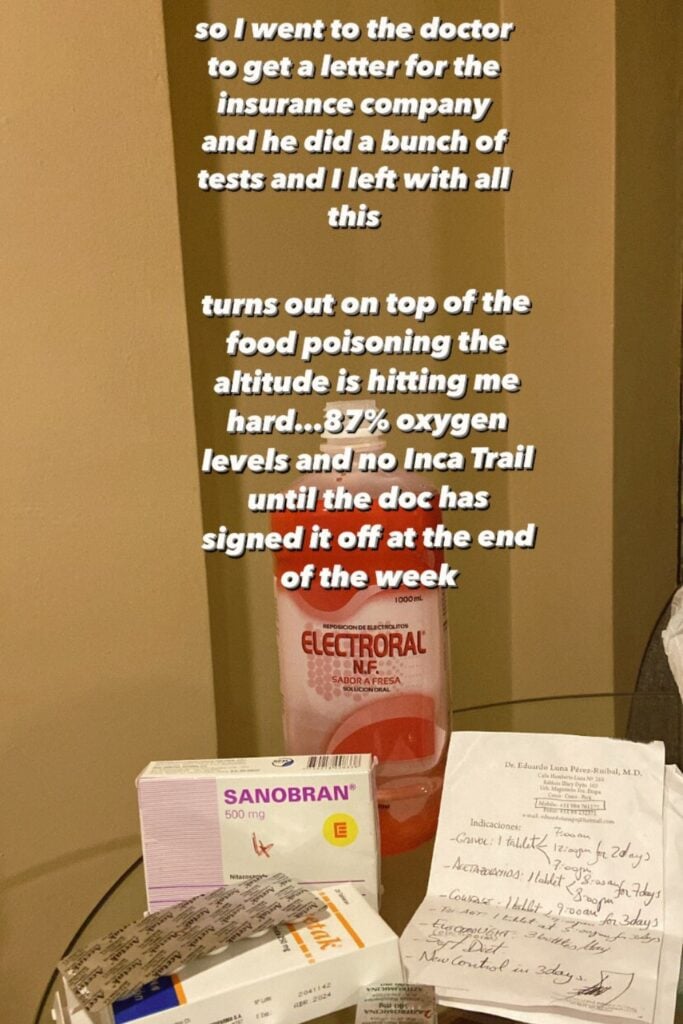
The three things you need to worry most about in Peru when it comes to health and safety are altitude sickness, food poisoning and earthquakes.
Oh, and the fact that, in general, health and safety regulations are way less strict than in most of Europe and the US.
Altitude
I think I was quite naive to how bad altitude sickness can be when I first arrived to Cusco because it really hit me like a truck. It’s no joke and you will 100% need to have atleast a day or 2 to acclimatise. Most travellers arrive in Cusco (or anywhere else that’s at altitude and instantly suffer from a bad headache, fatigue and move around the city like a snail because it’s a lot harder to breathe. Sounds fun, right? I promise it’s worth it, though.
To help with altitude sickness, you can get some medication from the pharmacy beforehand – either in your home country or in Peru.
Food poisoning
I have had food poisoning more times in Peru than I have anywhere else (which I guess kind of makes sense because I now live here), but still. I feel like my body has adjusted now, but when I did my first solo trip in Peru…wow. My top tips are to avoid salad and fresh fruit, never drink tap water, don’t buy from the street markets or stalls and always triple check that the meat or fish you’re eating is actually cooked.
I actually missed my 4-day Inca hike because of food poisoning and altitude sickness combined, meaning I had to fly back to Lima early. It was not a great time in my life, but thankfully (and yet again) it was covered by my Safetywing travel insurance.
Earthquakes
I don’t want to scare anyone here, but Peru is situated on ‘the ring of fire’ and there are earthquakes pretty much every day. Luckily, you’ll only feel a slight wobble every now and then, but it’s definitely something to be aware of. I’ll say no more on topic.
General safety
In general, things are much more lax. People rarely wear seatbelts, and they’ll pile 10 people into a car. When doing activities, just bear that thought process in mind and never ever do anything unless you’re covered by travel insurance.
I’ve already mentioned it but in case you missed it earlier and you’re interested in SafetyWing, you can read my full review – I’ve been with them literally since I started my solo backpacking trip to Peru and they worked out something like 80% cheaper than what I was previously paying, so I always recommend them.
Cultural Etiquette and Local Customs in Peru

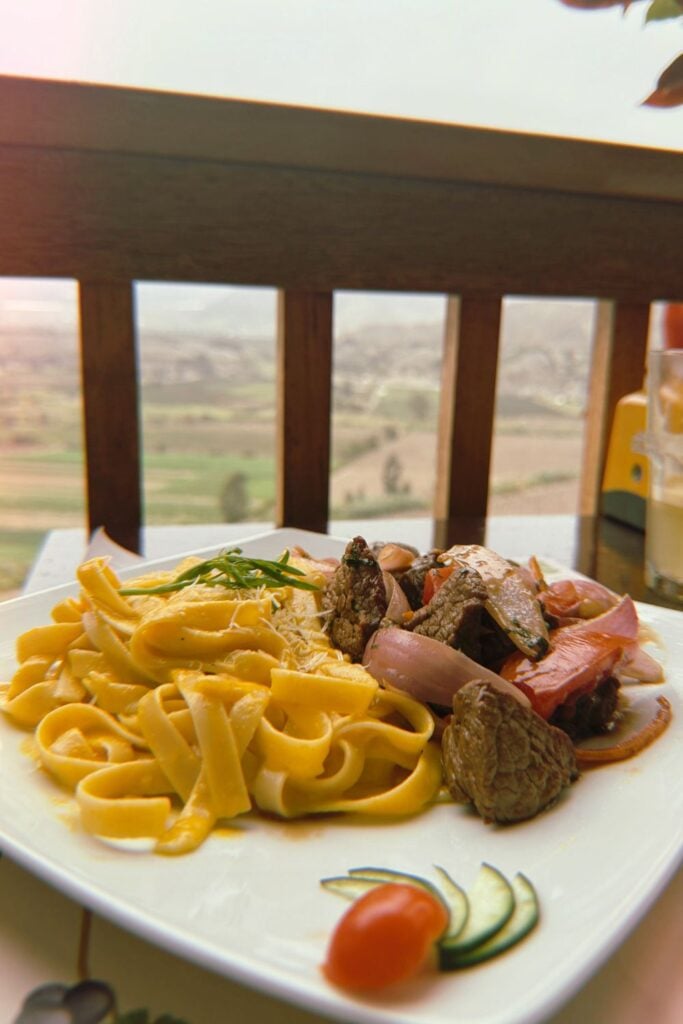
Peruvians are generally very helpful and chatty people, and always appreciate a bit of chit chat where you can. For example, if you’re entering an elevator, it’s expected to say ‘Buenas’ and when you leave ‘hasta luego’. Upon greeting someone, it’s polite to hug and kiss someone on the cheek – something thats kind of weird for me to have to consistently do as someone from the UK.
They’re also extremely proud of their food. The food here is some of the best in the world, and boy, do they want you to know it. Ceviche, Lomo Saltado, Polla a la Brasa…you name it, they think it’s the best food to grace this earth.
On the flip side, Peruvians (like a lot of Latin Americans) appear to have no concept of time. Everyone is late to everything, and it drives me insane. So if your guide says you’ll arrive at 4, it’s probably going to be 5.
In terms of clothing, there’s nothing to call out – you can wear what you want in Latin America.
Solo Female Travel in Peru
When it comes to solo female travel in Peru, the only additional thing to really be aware of is the catcalling and the number of Peruvian males hanging around popular spots like Kennedy Park in Lima purely with the purpose of approaching girls.
The catcalling is creepy, but the approaching girls thing is usually not in a creepy way – most of the time, they just want to practice their English with you or invite you to drinks or dinner because they think you’re pretty. They’re not pushy or trying to make you feel uncomfortable, and if you say you’re not interested or have a boyfriend, then they will leave.
Packing Essentials For Peru
Travel Documents and Money
- Passport & ID: Always carry a copy (digital and physical) in case you lose it – I have done this here!
- Visa (if needed): Check requirements based on your nationality – if you end up wanting to stay here like me, I wrote a whole guide on living in Peru as a digital nomad that has some good visa info in
- Credit/debit cards & cash: Carry some local currency (Peruvian Sol) for small purchases; ATMs are widely available in cities but sometimes have high fees!
- Travel insurance: Essential for health coverage and emergencies! As I’ve already mentioned a bajillion times, I personally use SafetyWing and have done ever since I began solo travelling. Here’s a breakdown of what you get with them:
- Medical Treatment & Hospitalization: Up to $250,000 per policy period.
- Emergency Medical Evacuation: Up to $100,000 lifetime maximum.
- Emergency Dental: Up to $1,000 per policy period.
- Lost Checked Luggage: Up to $500 per item, with a maximum of $3,000 per policy.
- Trip Interruption: Up to $5,000 for a one-way economy ticket home due to unforeseen events.
- Travel Delay: Reimbursement of up to $100 per day for 2 days, totaling $200.
- Evacuation Due to Local Unrest: Up to $10,000 lifetime maximum.
- Repatriation: Up to $20,000 for transport and $10,000 for local burial in case of death.
At 80% cheaper than what I was previously paying and just as great coverage, it was a no-brainer for me to switch to them. Plus, I’ve claimed a couple of times now without any issues and I recently found out that things like having your parents flown out to be with you in an emergency situation are also covered, which is really good to know, as I never would have known that.
Clothing
Lightweight layers: Peru has diverse climates—hot on the coast, cold in the mountains.
- Waterproof jacket: For hiking and rainy seasons (especially in the Andes because it literally switches at the drop of a hat!)
- Comfortable walking shoes: Essential for exploring cities and hiking.
- Sandals or flip-flops: Useful for beaches or hostel showers (trust me)
- Warm clothing: Sweater, fleece, or thermal layers for high-altitude areas like Cusco or Huaraz.
- Sun protection: Hat, sunglasses, and UV-protective clothing – you get way more burnt at higher altitude
- Quick-dry clothing: Helpful if you’re trekking or visiting humid areas like the Amazon!
If you’re looking for a full packing list for Peru then I’ve written a specific guide for that!
Health and Safety
- Basic first aid kit: Include plasters, antiseptic, painkillers, and altitude sickness tablets if visiting high elevations.
- Prescription medications: Bring enough for your entire trip (although in my experience, you can get pretty much whatever you need over the counter in Peru)
- Hand sanitizer & masks: For hygiene in crowded areas.
- Mosquito repellent: Especially if you’re heading to the Amazon or jungle areas.
- Reusable water bottle with filter: Tap water isn’t safe; hydration is important, especially at high altitude.
Technology
- Phone & charger: A portable power bank is useful for long bus rides or hikes
- Camera/GoPro: Optional but recommended for capturing landscapes and experiences – I took mine and it was pretty heavy though.
- Drone: Really great to have but there are rules and regulations about bringing it into the country
- Plug adapter: Peru uses Type A and C plugs.
- Earphones: For travel, music, or language learning apps – AirPods are fine to have on show and I use Duolingo.
- Offline maps or GPS device: Google Maps offline or maps.me can be lifesavers in remote areas
Travel Gear
- Daypack: For daily excursions or short hikes.
- Packing cubes or organisers: Keep luggage compact and organised – I literally never go anywhere without them.
- Money belt or hidden pouch: Extra safety for valuables.
- Travel towel: Lightweight and quick-drying for hostels or beaches.
- Reusable shopping bag: Useful for groceries or souvenirs etc.
Random Useful Stuff I Also Use On Solo Trips
- Google translate app: Helpful if travelling outside tourist areas.
- Snacks: Energy bars for hikes or long bus rides.
- Travel pillow, eye mask and big hoody: For comfort and warmth on overnight buses.
- Notebook or journal: To document your travels
- Silicone earplugs: my NUMBER ONE solo backpacking item (and something I still use every night now because living in a city is not quiet!)
Peru Solo Travel Itinerary Suggestions

I already wrote a 3 week itinerary for travelling Peru, and an itinerary for 10 days in Peru; however, for this guide, I’m going to mix things up a little bit.
If you’re only going to solo travel through Peru, then this is the order that I would recommend:
- Land in Lima (2 days)
- Bus to Paracas (1 day)
- Bust to Huacachina (1 day)
- Bus to Arequipa or bus back to Lima and fly to Arequipa (3 days)
- Bus or Fly to Cusco (7 – 10 days)
- Fly to Iquitos (3 days)
- Fly to Lima and take the bus to Huaraz (better to take the bus slowly to acclimate again) (5 days)
If you’re not only travelling through Peru, and instead you’re coming down from Ecuador and planning to bus it down to Lima, then I’d recommend adding Mancora as a stop and doing Huaraz first. Just be prepared for some long bus journeys.
If you’re coming up to Peru from Bolivia, then move Iquitos and Huaraz to the top of the list above and do the route in reverse – starting with Cusco and ending with Iquitos.
I did a lot of this route with PeruHop, and whilst it is more expensive, I made more friends this way, and you have the security of it being more organised with a company to rely on, without it being a group trip as such.
Budgeting and Money Tips
Now, if you’re wondering how much it costs to solo travel in Peru, I’m going to tell you what I spent. I would say I was a mid-range backpacker for this trip. Peru has a lot of things you can splurge on, but there’s also a lot of things you can save on.
My costs of travelling through Peru:
- Hostels (22 × $15) = $330
- Food (22 × $25) = $550
- Local transport (22 × $5) = $110
- PeruHop = $129 (I did Lima, Paracas & Huacachina)
- Local buses & Domestic flights = $205
- Amazon trip = $450 (I did 4 days, but I recommend you do 3 because 4 felt too long)
- Machu Picchu = $150 (this should have been $450 for the hike, but I got sick so had to to take the train)
- Extras activities/entrances/contingency = $320
Total = $2,244 USD
These are pretty standard costs in my opinion, but you could 100% make it cheaper by spending less on food (you can eat menu del dia for less than $5 here), staying in cheaper hostels and only taking the bus.
My Solo Travel Experience in Peru

Overall, my solo travel experience in Peru was incredible, and despite some of the safety issues, it was one my favourite memories to date, and the reality is, even though it’s a solo trip, you meet so many amazing people along the way and you don’t have to be alone at all.
Favourite Place: If I had to pick my favourite place, it would have to be Arequipa; however, I do love my home city of Lima. The Malecón on a sunny day is my favourite place to be, and there are so many cute cafes to work from – being a digital nomad in Lima is great.
Best Experience: I feel like I should say visiting Machu Picchu or the Amazon Rainforest and yes, whilst it’s undoubtedly incredible, the times where I laughed, where I was filled with adrenaline and built the strongest connections where the experiences that were a fraction of the cost – sandboarding and buggying in Huacachina, riding ATVs through the Sacred Valley and hiking in Huaraz.
Favourite Food: You’ll quickly learn that Peru has some of the best food in the world and is far better than what’s on offer in some of the surrounding countries; however, if I had to pick one dish, I’d say Lomo Saltado wins. For a juice, I’d go with Jugo de Lucuma (just make sure you get it with milk and sugar…it’s not the healthiest option I know, but it’s so damn good)
Final Thoughts
That’s a wrap on my guide to solo travel in Peru – I feel like I got a lot packed into this guide, so I really hope you took something valuable away from it, and you’re going to go ahead and book your trip without hesitation if you haven’t already. If you have any more questions, feel free to drop them down below, reach out via my contact page or drop me a message on Instagram.
Millie / Stay Wild Travels.